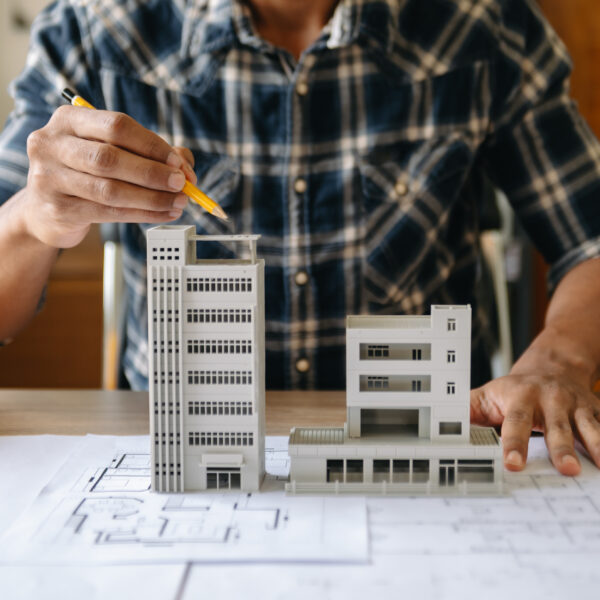

Construction schedules usually appear very straightforward: the client signs off on the design, construction begins, material deliveries take place, and the building becomes closer and closer to completion. In practice, a number of things are happening at once. Material shortages, labour availability issues, site circumstances, design changes and collaboration between various parties can all influence the final completion date.
That is the reason why modular construction turnkey projects have become increasingly popular in projects in which timing plays an important role. Through manufacturing certain parts of the structure at another location and then assembling them, a client manages to limit the volume of work traditionally performed on-site.
The degree of the reduction in construction timelines depends on the specifics of each project, but potential savings may be quite large (40% in some cases). Nevertheless, for clients opting for turnkey construction, the key issue is not just speed but efficiency of the whole process.
What Traditional Civil Execution Looks Like
Conventional construction normally happens on-site to a great extent. There is a sequence for civil work, structure, electrical installations, plumbing, interiors, and other activities.
This strategy continues to be useful in many cases where the design needs heavy customisation or where modular construction turnkey projects would not work well due to conditions on-site.
A client can encounter delays in case one activity is totally dependent on the other. A delay in civil work can mean a delay in electrical installation work. Shortage of materials can have an effect on many subsequent activities. Any change in design halfway can also mean doing some of the completed work again.
How Modular Construction Changes the Process
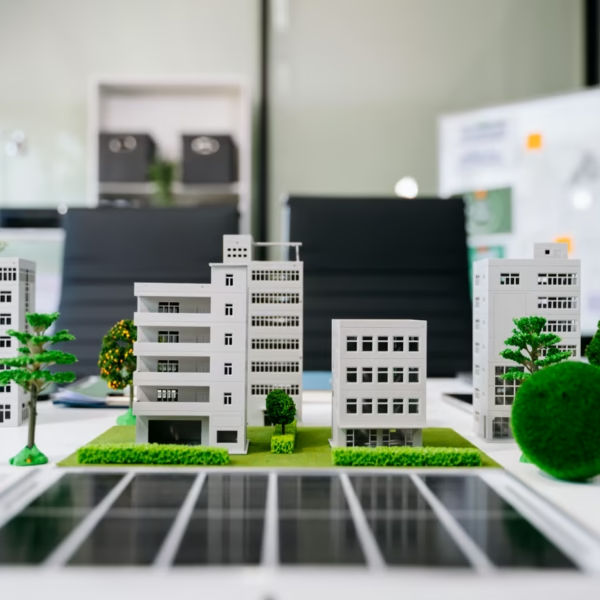
Construction that is carried out using modules shifts some of the preparation activities from the site where the project will take place.
It becomes possible to get one significant benefit from this process. Instead of waiting until one activity is done and then starting another one, you can perform some of the activities at the same time.
Where the 40% Time Saving Can Come From
Increasing the speed of a turnkey project by 40% does not necessarily indicate that every modular project is going to be completed by 40% quicker.
The savings are achieved through reduction in idle times and doing more activities simultaneously.
For instance, during the process of conducting site work or preparing the foundation, some parts of the project can be prepared elsewhere.
Procurement activities can run concurrently with engineering activities instead of having them done after the completion of all construction works.
Why Planning Matters More Than Speed Alone
Modular construction should have a well-defined design prior to the process of manufacturing.
Delay in design change could cause some trouble because the component may have been manufactured already. This will lead to further difficulties, costs or delays.
Hence, the process of engineering and coordination still holds significance. Our turnkey project approach includes all the processes starting from design to engineering, procurement, construction, installation and commissioning in one comprehensive process. Turnkey services provided by Innovel also include civil construction, interiors, furniture, AV systems, MEP services and project management.
Where Turnkey Solutions Construction Fits In
A turnkey project provides the client a single cohesive model to go from the planning stage right up to completion.
According to Bhaskar Solar, the concept of the turnkey solutions construction refers to a whole project life cycle, including design, planning, implementation, and delivery. The information provided by us also emphasises project planning, coordination, quality, and control and implementation. This is especially important when modular construction turnkey projects are involved.
Modular Does Not Mean Suitable for Every Project
No construction process can be equally effective for all sites.
It will be necessary for the client to analyse the building type, space availability, transportation, site conditions, and other factors in order to decide whether the modular construction is to be undertaken.
The civil construction process might be more appropriate when a lot of modifications have to be done at the site. Modular construction turnkey projects can be beneficial when there are multiple repeatable elements involved.
The decision-making factor is the project, not the process.
Why Innovel’s Turnkey Approach Matters
We handle turnkey infrastructure projects across commercial offices, educational institutions, shopping malls, power plants, hospitality spaces, healthcare facilities, retail and other infrastructure environments. Its model combines engineering, procurement and construction within one project framework.
For a client, this integrated approach can make it easier to coordinate different stages of execution.
If modular construction turnkey projects can reduce on-site work and allow parallel activities, a turnkey partner can incorporate that method into the wider project plan rather than treating it as a separate activity.
The Future of Faster Turnkey Construction
The issue of construction speed will remain relevant to the client since every single day may influence project costs and even business strategies.
modular construction turnkey projects are one of the methods that can help cut some days in the process. With a good engineering concept, early procurement and proper project management, modular construction helps in achieving efficient implementation.
In turnkey construction, speed is achieved by coordination at least as much as by technology. When all processes from design to installation and commissioning take place following one concept, the client gets closer to the successful completion of the project.
FAQs
- Is modular construction quicker than conventional construction?
This can be true because some tasks can run simultaneously rather than strictly sequentially.
- Is modular construction cheaper than conventional construction?
This is not necessarily the case because cost considerations vary depending on the design, material, logistics, labour costs and others.
- Can modular construction be applied to commercial buildings?
Yes. It can be applied to suitable commercial buildings.