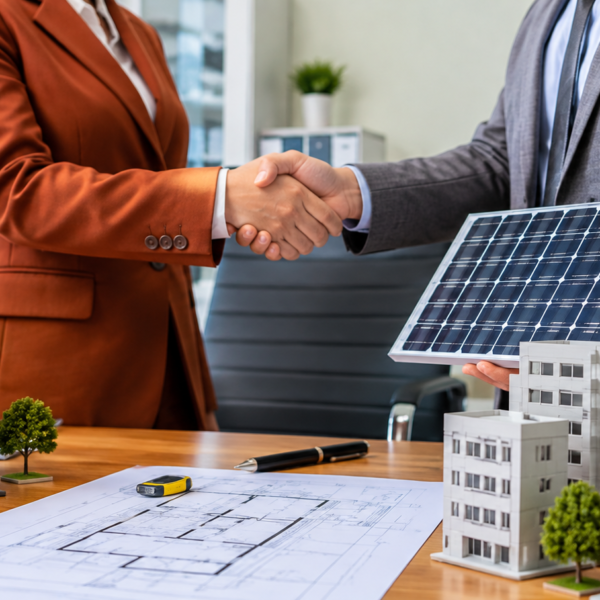

For modern corporations, infrastructure has moved beyond mere buildings, equipment, storage and IT. Energy is as much a consideration now due to its influence on the cost of operations, manufacturing schedules and corporate decision-making processes. With rising electricity demand, many firms are now considering commercial solar system installation as a viable solution to partly supply their own energy.
At Innovel, we work with firms to consider commercial solar services for businesses as a possible solution to meet their energy needs. This depends on the facilities, energy needs and future plans of the organisation. This move toward solar energy is part of the growing trend in infrastructure among companies to own facilities which aid operational activities while preparing for future energy needs.
Making Energy Part of Business Planning
Electricity is necessary in virtually everything done in a commercial building. Manufacturing machines, computer and other office equipment, cooling, heating, and lighting depend on electricity. If there is an increase in the cost of electricity, it will be difficult for a company to estimate costs.
Through proper planning, the installation of a commercial solar system can enable the business to produce electricity. As the electricity production and the demand coincide during the daytime, the business can take advantage of this by consuming most of the electricity produced.
This applies to industries, warehouses, hospitals, hotels, and office blocks with consistent electricity demands during the day.
Making Better Use of Existing Space
Commercial buildings have many rooftops which may have no other use than for water tanks or machinery. Depending on the building’s ability to withstand weight as well as other factors such as shading and access, the roofs can be fitted with commercial solar panels without acquiring extra land.
For instance, our installation of a 304.9 kWp rooftop solar plant is set up in an industrial unit in Kalyani, West Bengal. This demonstrates how a commercial establishment can host a large-scale solar panel setup based on its layout, electrical needs, and access.
For commercial buildings planning on expanding their operations, this can be a great way to utilise their rooftop space.
Supporting More Predictable Operations
Modern business infrastructure must support operational continuity by ensuring that essential activities can continue with minimal disruption. The production of power from commercial solar systems will help minimise the dependence on grid power during the production hours. However, the amount of energy produced by solar is subject to change with time and climatic conditions. Just because a solar energy system is connected to the grid does not mean that it provides backup in case of a power failure.
It will be important for a company to understand its working schedule, consumption pattern, and loads before selecting an optimal system for it. A company that has lots of machinery in operation during the day will have different requirements as compared to a hotel that uses a lot of power at night.
Connecting Solar With Sustainability Goals
Companies need to increasingly report on the manner in which they control their energy usage and impact on the environment. Solar energy may be helpful in reducing dependence on fossil fuel-based energy depending on the grid mix and efficiency of the solar energy system.
Using solar power for businesses helps in sustainability reporting and achieving environmental goals, but results should be derived from real generation and assumptions made clear. Companies can keep track of the amount of electricity generated by their systems and then calculate the emissions reductions achieved through the proper factors.
Planning for Long-Term Value
However, there are many factors that can affect the viability of a commercial rooftop solar energy project. Companies should not only look at how much it costs to install but also how much it will generate, the condition of their roof, the quality of the equipment, the permits and the maintenance required, as well as the life of the system.
We at Innovel take into account the energy needs of the business, available space, technical aspects and long-term operation requirements when evaluating the feasibility of solar energy for their commercial clients.
As companies rethink their facilities, a commercial solar system is emerging as an increasingly feasible consideration for energy generation and consumption within a facility.
FAQs
- What is a commercial solar system?
It is a solar energy system that is meant to generate energy that is used by businesses including industries, office buildings, hotels and other businesses.
- Are commercial solar panels appropriate for all businesses?
No, not all businesses have appropriate conditions where solar panels will work. One needs to consider the roof type, structural strength, available space and electrical needs of the business.
- Can a commercial solar system be operated by a business in case of a power outage?
A standard grid-tied solar system will shut down when there is an outage. On the other hand, off-grid connections or battery backed up solar plants will continue to provide power even when there is a power outage.
- What is the lifespan of commercial solar panels?
Many commercial solar panels can last for more than 30 years while their efficiency decreases gradually over time.
- How can a business determine the appropriate size of a solar system?
Consider electricity bills, daylight electricity consumption, space availability and other factors before making up your mind.