
It is well known that managing electricity consumption is a daunting task for those working in energy or electrical engineering when there is poor visibility. Power generation is no problem, but knowing when and where the demand will increase is the major issue.
That is why energy demand forecasting becomes an essential aspect.
Forecasting becomes increasingly accurate due to how accurate the predictions made will be. And nowadays, the bulk of improvements are being brought about by smart metering technology.
Why Traditional Forecasting Often Falls Short
The traditional method of forecasting is based on average past history and regular intervals. The challenge is that electricity use is no longer consistent in a month-to-month pattern.
Usage in cities varies unpredictably during heat waves. Business usage is affected by commercial activities. The residential consumption varies depending on holidays, seasons, and the evening peak.
If there is a delay or lack of information, the energy demand forecasting becomes reactionary rather than being proactive. The consequences are:
- Load balancing
- Outage management
- Buying power
- Peak demand
It will not be easy for the utility companies to forecast using behavioural data with restricted information.
How Smart Meter Data Changes the Process
The visibility of electricity consumption in India has significantly improved due to the rise in the usage of smart meters.
Unlike traditional meters, smart meters provide continuous measurement of electricity consumption.
Thus, forecasting has shifted from a process of guessing to one of actual observation.
These are some of the aspects that the utilities can actually observe:
- Peak times of usage
- Area-based consumption pattern
- Seasonal changes in demand
- Load surges
Better Forecasting Improves Grid Management
Demand forecasting goes beyond just estimating future demand. It has an effect on how the grid functions each day.
With more accurate knowledge of the demand trend, utilities will be able to:
- Ensure effective balancing of feeder loads
- Manage stresses during peak periods
- Carry out maintenance without affecting supply
- Ensure faster restoration of outages
All this becomes particularly significant for the developing urban hubs where demands are changing at a fast pace.
The smart meter installation in such situations allows for better visibility of demand trends within a relatively shorter period of time.
The Role of Smart Meters at the Consumer Level
Smart meter readings not only serve utility companies but are also beneficial to consumers.
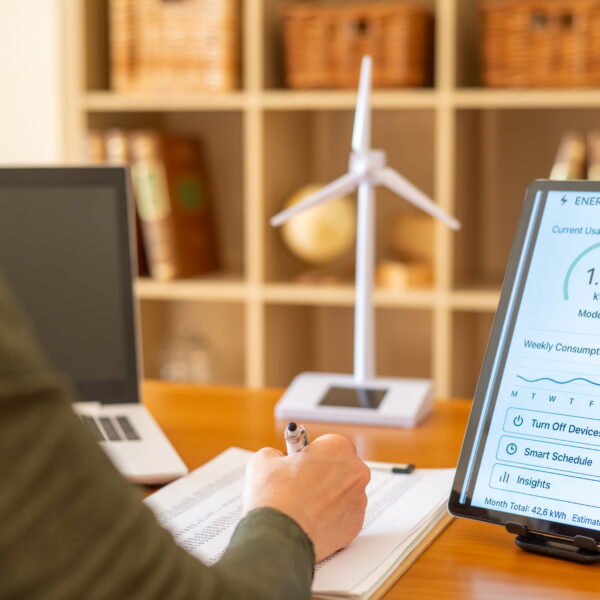
The smart energy meter for home enables individual households to track their consumption trends better.
They will be able to identify high-consumption periods and change their behaviour patterns accordingly.
It results in a gradual modification in the pattern of demand.
Once consumers become aware of their high-consumption hours, their unnecessary consumption decreases by itself.
In the long run, it helps achieve a balanced load on the power grid.
Why Regional Rollouts Matter
These places have different consumption patterns. Different consumption patterns exist in urban centres, industrial areas, and semi-urban centres.
This explains the importance of such deployment models as the smart meter in west bengal project. The regional data helps the utilities get insights into the local consumption pattern rather than focusing on the state-wide figures.
Accurate local forecast will be essential for better infrastructure planning by the utilities. They will be able to tell which locations require infrastructure improvements.
The usefulness of a forecast depends on the data granularity.
Where Innovel Fits Into This Shift
Innovel Energy spans smart energy and metering systems, specifically emphasising how information affects operations management under realistic conditions.
However, the importance of smart metering is not confined to the automatic billing function alone. Other applications include monitoring the power grid, forecasting demand for energy, and optimising the grid operation itself, especially keeping the Indian scenario in mind.
Field experience with smart metering systems in India reveals that accurate forecasting relies not only on technology but also on its implementation. The quality of the meters, stable communication, and data integration will influence the accuracy of the collected data.
Accurate energy demand forecasting starts with collecting quality data.
Where This Is Heading
The power network of India is getting more and more data-centric. With an increasing use of smart meters, the accuracy of energy demand forecasting can only improve further.
This trend may seem like a slow process on paper, but on the ground, the dynamics of power consumption are already beginning to transform.
Greater visibility means better planning.
FAQs
1. What is energy demand forecasting?
Energy demand forecasting is the forecast of electricity consumption in the future in order to facilitate efficient electricity generation and supply.
2. How do smart meters improve demand forecasting?
Smart meters help get accurate information about electricity consumption at the right time.
3. What is a smart meter system in India?
The concept of a smart meter in India can be explained as the installation of an advanced metering system for electricity consumption.
4. How do smart meters help households?
Smart meters help households check their electricity consumption.
5. Why should utilities adopt smart meters?
Smart meters help utilities in better billing and forecasting of demand.