
Power distribution networks were never originally designed for the kind of demand seen today. Cities expand. Industrial parks grow. Renewable energy sources push electricity into the grid from unexpected places.
In many parts of India, the distribution infrastructure still relies on systems built decades ago. They work, but they were not designed for real time data or automated decision making. This is where IoT in power distribution is beginning to change the conversation.
The Internet of Things, when applied to power networks, allows utilities and energy operators to see what is happening inside the grid at any given moment. Voltage levels, equipment health, demand patterns. Instead of reacting to failures, the system begins to anticipate them.
It may sound technical. In practice, it simply means a smarter and more responsive grid.
Why Traditional Distribution Systems Struggle Today
Power distribution networks traditionally operate as one way systems. Electricity flows from generation plants through substations and eventually to homes, factories and commercial buildings.
That model worked when demand was predictable and energy flowed in a single direction.
Things look different now.
Solar rooftop installations are pushing electricity back into local grids. Industrial clusters can create sudden spikes in demand. Weather patterns, particularly extreme heat in Indian summers, strain distribution equipment.
Without visibility into these changes, utilities often discover problems only after an outage occurs.
This is where IoT in power distribution begins to offer practical value. It gives grid operators continuous awareness of what is happening across thousands of distribution points.
Real Time Monitoring Changes Grid Management
One of the most immediate benefits of IoT enabled networks is real time monitoring.
Sensors installed across transformers, substations and distribution lines collect continuous data about voltage stability, current flow and power quality. This data travels through communication networks to control centres where operators or automated systems analyse it.
If a transformer begins overheating or voltage levels drift beyond safe limits, the system can detect it instantly.
In practice, this reduces the response time for faults dramatically. Instead of waiting for complaints from consumers, utilities can identify problems at the source.
Many modern smart metering solutions also contribute to this visibility by providing accurate consumption data from the consumer end.
Predictive Maintenance Reduces Costly Failures
Distribution infrastructure experiences constant stress. Transformers, circuit breakers and feeders all degrade slowly over time.
Traditionally, maintenance follows a fixed schedule or happens only after equipment fails. Both approaches can be inefficient.
IoT based monitoring changes that model.
Sensors track temperature, vibration and load conditions inside critical equipment. When abnormal patterns appear, engineers receive early warnings.
For example, if a distribution transformer shows rising temperature trends over several weeks, technicians can inspect and repair it before a breakdown occurs.
This predictive maintenance approach reduces unexpected outages and lowers repair costs. For utilities operating across large geographies, the savings can be significant.
Integrating Renewable Energy into the Grid
India’s renewable energy expansion has introduced a new complexity into distribution networks.
Solar and wind generation are intermittent by nature. Cloud cover or wind changes can alter power output quickly. Without coordination, this variability can disturb grid stability.
This is where IoT in power distribution becomes especially useful.
Real time data allows operators to track generation levels from distributed solar installations and balance supply with demand. Automated systems can adjust loads, reroute electricity or coordinate energy storage solutions when fluctuations occur.
Such coordination becomes even more important as rooftop solar adoption increases across commercial and residential sectors.
Smart grid infrastructure ensures that renewable energy becomes an asset rather than a disruption.
Demand Response and Consumer Awareness
Electricity demand rarely stays constant throughout the day. Peak hours, particularly during evenings in urban areas, put enormous pressure on distribution systems.
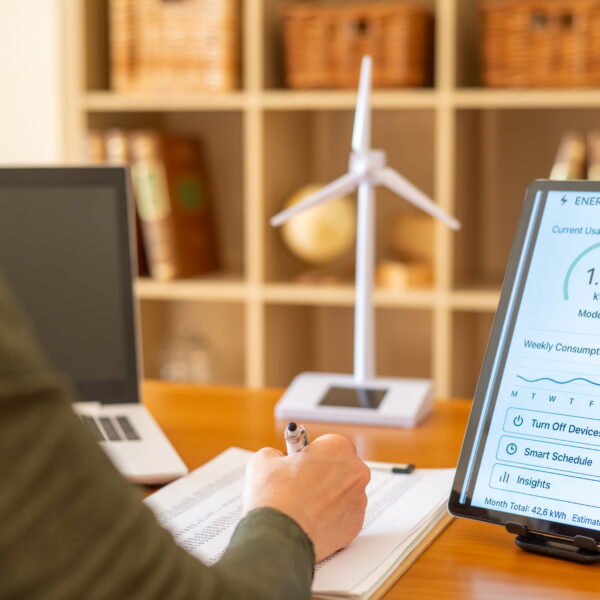
Through IoT smart metering, utilities can communicate directly with consumers about their energy consumption patterns. Smart meters allow households and businesses to track real time usage instead of waiting for monthly bills.
This two way communication also enables demand response programs.
During peak demand periods, utilities can encourage reduced consumption or adjust tariffs temporarily. When consumers understand their usage patterns, energy behaviour often changes naturally.
In practice, this shared visibility helps flatten demand peaks and improve overall grid efficiency.
Security and Grid Resilience
As power networks become more connected, cybersecurity becomes an equally important concern.
IoT enabled grids provide greater visibility into network activity, which actually strengthens security monitoring. Suspicious communication patterns or unauthorised access attempts can be detected earlier.
Modern grid architectures also distribute intelligence across multiple systems rather than relying on a single control point. This decentralised structure improves resilience during disruptions.
When systems detect faults or cyber threats, automated controls can isolate affected segments without shutting down the entire network.
The Technology Layers Behind IoT Grids
IoT enabled distribution networks rely on three interconnected layers.
The perception layer consists of sensors, smart meters and intelligent electronic devices that collect data about grid conditions.
The network layer transmits this data through communication technologies such as fibre networks, Zigbee or cellular connections.
The application layer analyses the incoming information using cloud platforms and analytics tools. Utilities then make operational decisions or automate responses based on this analysis.
Together, these layers transform traditional infrastructure into an adaptive and data driven energy system.
A Gradual but Necessary Transformation
Modernising power distribution does not happen overnight. Infrastructure upgrades require careful planning, investment and coordination between utilities, technology providers and policymakers.
Still, the direction is clear.
As electricity demand grows and renewable energy becomes more widespread, intelligent grid management will become essential. Smart metering services, advanced monitoring systems and connected infrastructure will gradually replace older passive networks.
Organisations working in power infrastructure and energy management increasingly play a role in this transition. Companies such as Innovel, which operate across engineering and energy solutions, contribute to projects involving grid modernisation and smart metering solutions that improve operational visibility.
For utilities, industrial consumers and infrastructure planners exploring the next phase of energy systems, conversations around IoT in power distribution are becoming less theoretical and more practical. Speaking with experienced professionals familiar with India’s power ecosystem can often help clarify how these technologies fit into long term grid development strategies.
FAQs
1. What is IoT in power distribution?
It refers to using connected sensors, smart meters and communication networks to monitor and manage electricity distribution in real time.
2. How do smart meters support power distribution networks?
Smart meters provide accurate consumption data and enable two way communication between utilities and consumers.
3. Can IoT reduce power outages?
Yes. IoT sensors detect faults early and enable faster response, reducing the frequency and duration of outages.
4. Why is IoT important for renewable energy integration?
It helps balance fluctuating solar and wind generation with electricity demand through real time monitoring and control.