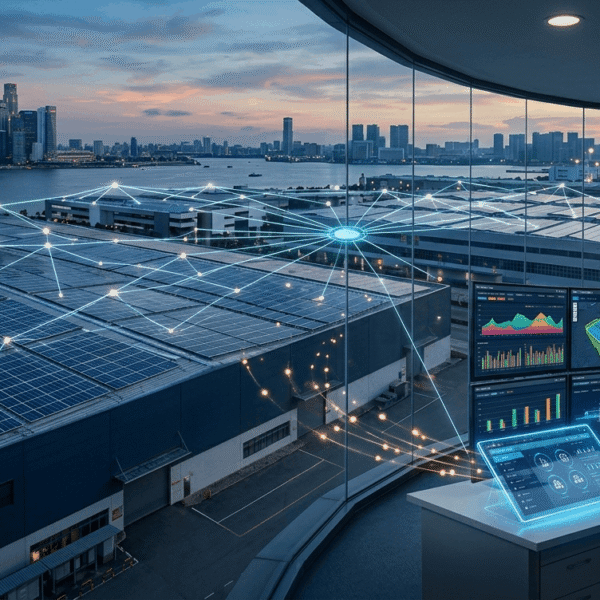

If you have a manufacturing unit in India, you must understand that energy is no longer something that can be considered merely a cost of operation. Energy has become a strategy in itself.
High energy costs, growing focus on environmental issues, and global logistics pressures have forced manufacturing companies to look into ways in which energy can be obtained and utilised.
That is when the importance of solar panels for commercial use comes into the picture.
The discussion is no longer limited to saving money. Instead, sustainability has become the focal point.
Why Manufacturing Units Are Under Pressure
Manufacturing plants use massive amounts of energy every day. They work non-stop, from equipment to coolers, processors to lighting.
On the other hand, firms now have to achieve some targets in relation to their impact on the environment due to ESG reporting and net zero goals. In the case of firms that are involved in exports, this pressure increases.
How do manufacturers fulfil their green requirements without interfering with product production?
Here is where commercial solar systems enter the picture.
Solar Panel for Commercial Use Changes the Cost Structure
The price of conventional electricity is not constant but varies with time.
Increased tariffs and high peak demand costs make planning difficult, particularly for large-scale electricity consumers.
An optimally engineered solar panel for commercial use transforms the situation.
After its installation, the electricity produced from such systems is free from ongoing fuel expenses.
For production plants that consume most electricity during daylight hours, this reduces reliance on electricity supplied from the grid.
As time passes, the benefits become apparent.
Perhaps most crucially, there is certainty with regards to electricity prices.
Why Commercial Solar Fits Manufacturing Operations
Solar panels have been found to be especially ideal in manufacturing facilities due to the way they utilise electricity.
Most plants:
- Operate in the daytime
- Have a lot of roof space
- Have constant demand for energy throughout the day
The process of creating energy through commercial solar systems fits perfectly with the process.
Rather than generating excess energy, the system works during high-productivity times. The process increases efficiency and reduces the period needed to recoup investment costs.
This is where Innovel brings practical experience through its work across energy and infrastructure projects. The focus stays on aligning solar systems with real operational conditions rather than standard configurations.
Net Zero Goals Need Practical Energy Shifts
While net zero ambitions can seem far-fetched, once you make decisions that start influencing the targets, things can get real fast.
For companies, energy consumption contributes largely to indirect greenhouse gas emissions. Cutting back on energy from grids by embracing solar power becomes an important way to reduce carbon footprints.
It does not completely eradicate emissions but makes the steps visible.
It is evident in energy infrastructure management, where efficiency measures take root through energy management. The same holds true for solar power.
For businesses looking to achieve a balance between their sustainability efforts and operations, solar panels for business make for a great place to start.
Installation Quality Still Determines Results
The success of the solar energy system is highly dependent upon its execution.
For companies using solar power in a production facility, they impact not only efficiency but also system reliability.
That is why hiring commercial solar installers experts is vital.
The thorough evaluation process should take into account:
- Work schedule and demand for electricity
- Roof construction and available space
- The future needs to extend the system
- Weather and environmental factors
Our team at Innovative has extensive experience with both energy and infrastructure systems, which emphasises that principle.
With proper planning, the solar panels for business become an asset.
Beyond Sustainability: Operational Advantage
The transition to solar panels for commercial use is also impacting the way manufacturing plants approach risk management.
Plants that produce some portion of their own power become less affected by changes in the cost of electricity. This adds a degree of certainty to planning.
We at Innovel approach solar integration with this long-term perspective. Projects are planned around operational sustainability rather than short-term installation targets.
Solar is thus a double-edged sword for many manufacturing facilities.
FAQs
- Why are commercial solar panels good for manufacturing firms?
Manufacturing industries have higher power consumption during the daytime; hence, solar energy can come in handy to reduce their reliance on the electric grid.
- Do commercial solar panels help in reducing operating expenses?
Yes, they help in reducing operating expenses by reducing costs of electricity and making forecasts about electricity costs.
- How can commercial solar help businesses in reaching net-zero goals?
Commercial solar panels help in reducing dependence on the traditional source of power and hence reduce indirect carbon footprints.
- What factors should businesses keep in mind while employing commercial solar installers?
Proper assessment of energy, proper planning, and industrial installations should be prioritised by businesses.
- How long do commercial solar systems last?
Commercial solar systems last for an average of 20-25 years.