
In Indian commercial structures, the failure of cooling or heating systems happens less frequently and is not as sudden as it is in other countries. As a fact, this is a gradual process of negligence, reduced performance due to the heavy load of seasonal demand, as well as a negligible problem ignored for far too long. For every individual who has been or is currently related to the management of a commercial entity, it is apparent that a small problem in the cooling or heating system creates a significant disturbance in an office, hospital, or retail or manufacturing setup.
This document is intended for facility managers and/or operations heads or owners of businesses in India to gain insight before asking a technician to visit their premises. This document deals with what can be checked before involving a technician, what should not be delayed, and how ‘preventive thinking’ translates to cost savings down the line.
Why HVAC-related Problems Are Frequent in Indian Commercial Buildings
The climate in India imposes a set of unique stresses on building HVAC systems. In addition to high temperatures and humid conditions during summertime, significant amounts of suspended dust and power variations compound their performance degradation beyond what is generally anticipated. In most multipurpose buildings, their operation beyond rated capacity is quite prevalent—especially in India and in cases where retrofitting work was accomplished without appropriate recalculation of their loads.
A good facilities management company considers all such aspects collectively, and not just as individual setbacks.
Prevention Is the Real Cost Saver
Most of the HVAC breakdowns can be avoided through experience. Preventive costs are higher than corrective costs.
Maintenance is important. Tune-ups once a year permit professional cleaning and testing. Scheduled replacement of filters sustains proper airflow. Energy evaluations point out leaks and allow upgrades before breakdowns.
Working in partnership with a knowledgeable service provider who can provide integrated facility management solutions can help ensure the monitoring of the heating, ventilation, and air conditioning functions, together with the electrical, safety, and energy requirements.
Those who associate with a trusted IFM company like Innovel can take advantage of this preventive approach, particularly in situations where the HVAC system is involved in critical processes.
HVAC and Smarter Commercial Facility Management Decisions
Effective HVAC management goes beyond simply fixing problems when they arise. It requires a deep understanding of operational patterns, system stress points, and real-world limitations. Well-structured commercial facilities management relies on continuous observation, routine inspections, and timely professional support to ensure optimal performance.
“A reliable partner like Innovel understands how buildings function in real-world conditions, not just in theory,” says Rajkumar. This practical insight allows issues to be identified more quickly, solutions to be implemented efficiently, and outcomes to be more predictable and reliable.
However, before you call for professional assistance, you would do well if you perform the checks as given below.
Basic Checks to Perform before Calling an Electrician
Some HVAC problems can be easily diagnosed. Early checks can avoid unwanted service calls and assist in the quick diagnosis of problems by your HVAC tech.
Thermostats
First, check the thermostat. The operation mode, whether cooling or heating, and the preset temperature should be verified. Poor batteries may lead to unreliable performance. Although simple checks can be easily performed, professional calibration in large commercial areas may be advised.
Air Filters
Clogged filters impair airflow and cause efficiency problems. Filters must be renewed every one to three months in dusty Indian climates. This resolves airflow issues identified in commercial facility management audits on numerous occasions.
Power Supply
Determine whether circuit breakers have tripped. Reset, if necessary. Additionally, ensure that the power switch is turned on. This could be indicative of underlying power issues.
Vents and Ductwork
Verify that the vents are open and not obstructed by furniture or partitions. Feedback from site work inspections reveals that temporary work modifications cause obstruction to airflow unknowingly. Check for visible duct leakage if possible.
Inspect Condenser Unit
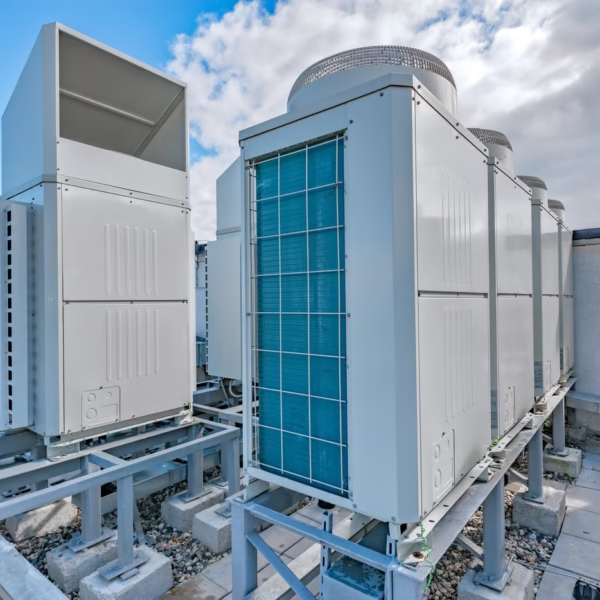
Remove any leaves, plastics, and dirt that have accumulated around the condenser. Outdoor units located in Indian cities can be affected by a lack of clearance and suspended debris.
Listen Carefully
Grinder noises, squealing, and banging are never to be expected. Even when the cooling process continues, one must pay close attention to these noises and act promptly.
When It Is Time to Call a Professional
There are problems that cannot be solved internally as an organization. Waiting for solutions may increase the cost of repairs.
Inadequate Cooling and/or Heating
If simple checks pass, problems may range from low refrigeration to blower motor problems to system imbalance. These will call for expert diagnosis.
Refrigerant Problems
Low refrigerant always means refrigerant leaks. Handling refrigerants without proper certification is dangerous and does not conform to the regulations of India.
Electrical or Motor Problems
If there are buzzing noises associated with the starting of the motor, or if there are starters that are not functioning due to frequent breaking, this indicates a problem with the motor or the
Unusual Noises
Grinding or metal sounds usually indicate bearing failure or loose parts. Turn off the system and contact a professional.
Clogs
Clogged drains result in water leakage and mold formation, which is a serious issue in humid parts of India.
Ductwork Design or Leakage
Flaws within the design of the ducts, damper malfunctions, or leaks cause inefficient cooling. These are prevalent within existing commercial buildings.
These are the most common HVAC issues, and now you know how to perform the checks, and also know that you can trust Innovel to maintain your unit and keep it running smoothly for a long time.
FAQs
What may be the recommended maintenance intervals for commercial air-conditioning systems in India?
At least once a year, although for buildings with heavy usage, a biannual inspection is beneficial.
Is it possible for a facility’s team to replace the HVAC filter themselves?
Yes, if properly trained and the system design allows safe access.
Why does my HVAC system cool floors variably?
These are usually indicative of duct imbalance or problems related to the dampers or zoning.
Is preventive maintenance cost-effective?
Yes. Saves on breakdowns, energy losses, and emergency repairs.